Drive through Brandon's commercial district and you'll notice a pattern. Most warehouses, retail plazas, and office buildings share one design feature: flat roofs. It's not a coincidence. Commercial roofing in Manitoba's prairie climate demands solutions that handle extreme temperature swings, heavy snow loads, and relentless wind. Flat roofing systems, when properly installed, deliver exactly that.
Flat roofs dominate commercial construction because they solve three critical challenges at once: structural efficiency for large footprints, cost control during installation, and simplified maintenance access. In Brandon and across the Westman region, where winter temperatures plunge to -30°C and summer hailstorms arrive without warning, modern flat roofing membranes have proven they can handle what the prairie throws at them. After 15 years installing and maintaining commercial roofs throughout Souris, Brandon, and surrounding communities, we've seen firsthand why this design choice makes practical sense for business owners.
Why Flat Roofs Are Used on Commercial Buildings
The question isn't really why flat roofs exist. It's why they make more sense than pitched alternatives for most commercial applications, especially in Manitoba.
Cost Efficiency Across Large Footprints
A 10,000-square-foot warehouse with a flat roof requires significantly less roofing material than the same building with a 4:12 pitch. You're covering the actual square footage of the building, not adding 30-40% more surface area to accommodate slope. For businesses working within tight construction budgets, that math matters.
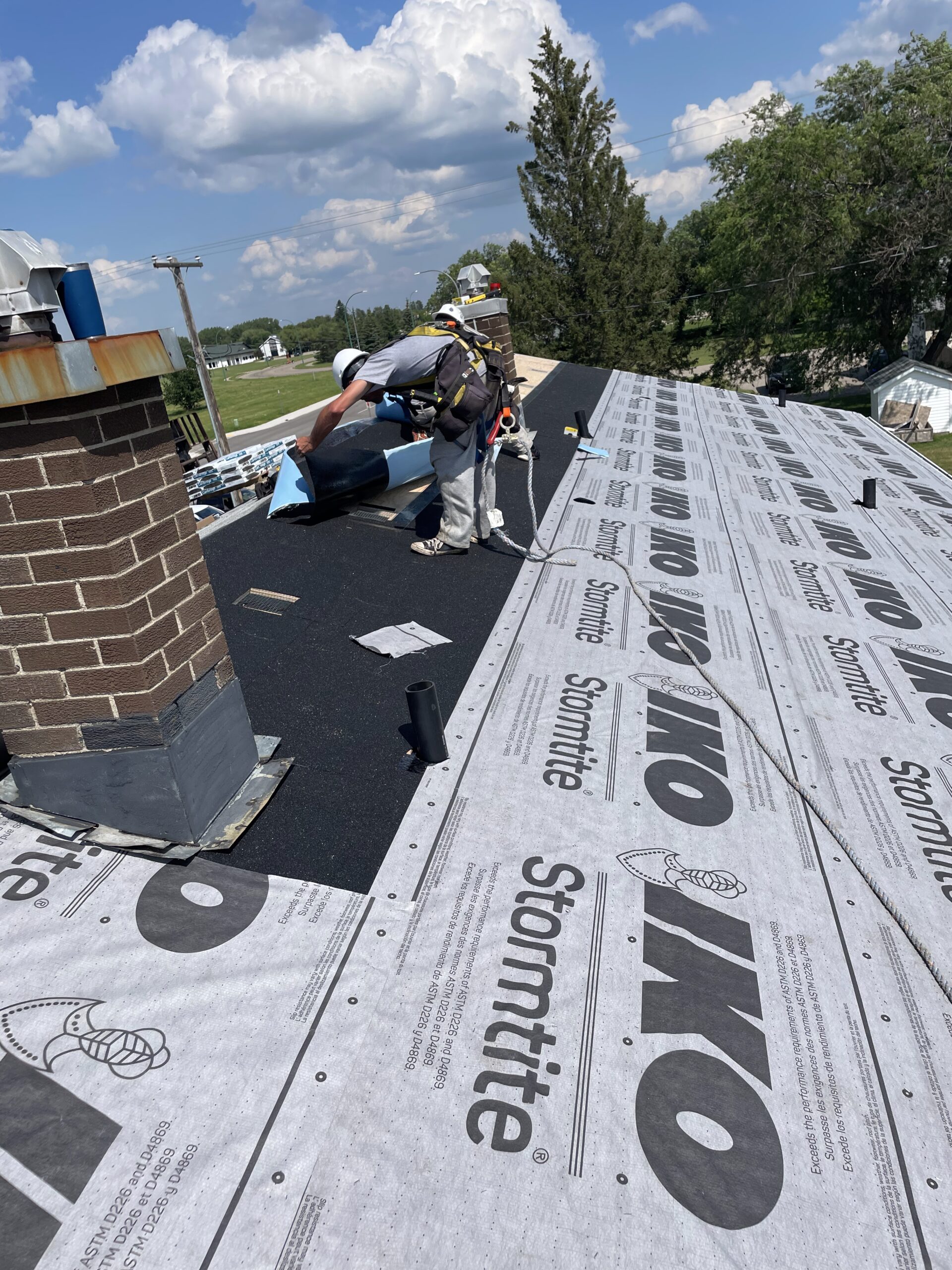
Labor costs drop too. Flat roof installations move faster. Crews work on a stable, level surface instead of navigating steep angles. Material delivery is simpler. There's no need for specialized scaffolding or safety rigging designed for pitched work. When you're roofing a 20,000-square-foot retail plaza in Brandon, those efficiency gains compound quickly.
Structural Simplicity and Snow Load Management
Prairie winters bring heavy, wet snow. A flat roof isn't actually flat (it carries a slight slope for drainage, typically 1/4 inch per foot), but the minimal pitch creates a predictable load distribution pattern. Engineers can design roof decking and support structures to handle Manitoba's snow load requirements without the complex hip-and-valley calculations required for pitched roofs.
Modern commercial flat roofs in Brandon are built to withstand snow loads of 40-50 pounds per square foot, well above the minimum code requirements. The uniform surface means snow accumulates evenly. There are no valleys where drifts concentrate stress on specific points. During spring melt, water flows predictably toward drains and scuppers instead of creating ice dams in roof valleys.
Wind Resistance in Open Prairie Conditions
Brandon sits in open prairie terrain. Wind doesn't have hills or tree cover to slow it down before it hits your building. Flat roofs present less surface area to wind uplift compared to pitched roofs. There's no large sloped plane for wind to get underneath and pry upward.
That said, wind resistance depends entirely on proper installation. Membrane roofing systems (TPO, EPDM, PVC) must be mechanically fastened or fully adhered to resist prairie wind events. We've repaired too many flat roofs where previous contractors cut corners on fastener spacing or adhesive coverage. A properly installed flat roof in Brandon weathers 100 km/h wind gusts without lifting or tearing. A poorly installed one fails in the first major storm.
Modern Flat Roofing Membranes Handle Freeze-Thaw Cycles
Older flat roofs earned a bad reputation. Built-up tar-and-gravel systems from the 1970s and 80s cracked under freeze-thaw stress. Water infiltrated seams. Ice expansion caused membrane failure. Business owners paid for repairs every few years.
Modern membranes changed that equation.
TPO and EPDM: Built for Temperature Extremes
Thermoplastic Polyolefin (TPO) and Ethylene Propylene Diene Monomer (EPDM) membranes are engineered specifically for climates like ours. TPO stays flexible at -40°C. It doesn't become brittle when temperatures drop. EPDM handles UV exposure during long summer days and contracts without cracking when winter arrives.
Both systems use heat-welded or chemically bonded seams instead of mechanical fasteners at every joint. That eliminates the thousands of potential leak points you'd find in older systems. A well-installed TPO roof in Brandon typically carries a 20-year manufacturer warranty, and we've seen them perform well past that when maintained properly.
Drainage Design Prevents Ice Damming
Flat roofs don't shed water the way pitched roofs do, so drainage design becomes critical. Every commercial flat roof we install in the Westman region includes:
- Minimum 1/4-inch-per-foot slope toward drains or scuppers
- Oversized drains to handle spring melt volume
- Secondary overflow drains or scuppers positioned 2 inches above primary drains
- Tapered insulation systems that create positive drainage across the entire roof deck
When drainage works correctly, water doesn't pool. Ice doesn't form dams. The freeze-thaw cycle that destroys poorly designed flat roofs never gets a chance to start. We've maintained commercial roofs in Souris and Brandon for over a decade where drainage was designed right from day one. Those roofs require minimal repair work because water moves off the surface before it can cause problems.
Mounting HVAC and Rooftop Equipment: The Hidden Advantage
Walk around any commercial building in Brandon and look up. You'll see HVAC units, exhaust fans, satellite dishes, and sometimes solar arrays. All of that equipment sits on the roof.
Try mounting a five-ton rooftop HVAC unit on a 6:12 pitched roof. It's possible, but it requires custom framing, extensive flashing work, and ongoing maintenance to prevent leaks around the mounting platform. On a flat roof, equipment sits on pre-manufactured curbs with integrated flashing systems. Installation is straightforward. Maintenance techs can walk around units safely instead of working on a slope with fall protection gear.
For business owners, this translates to lower HVAC installation costs and easier service access. When your heating system needs repair in January, the HVAC contractor can reach it without specialized rigging. That means faster repairs and lower emergency service rates.
Future Expansion and Modification
Commercial buildings change. You add a ventilation system. You upgrade to a larger HVAC unit. You install a grease trap exhaust hood. Flat roofs accommodate these modifications without major structural work. Your roofing contractor cuts an opening, installs a curb, integrates flashing with the existing membrane, and you're done.
Pitched roofs require structural changes every time you penetrate the roof plane. You're cutting through rafters or trusses, adding framing, and creating complex flashing details around sloped surfaces. The labour cost alone often doubles compared to the same work on a flat roof.
Commercial Roofing Material Options for Brandon Buildings
Not all flat roofs use the same membrane. Your building type, budget, and performance requirements determine the best choice.
TPO: The Current Standard
TPO dominates new commercial construction in Brandon. It offers strong heat-welded seams, excellent UV resistance, and energy-efficient white or tan colour options that reflect summer heat. A typical TPO installation on a 15,000-square-foot commercial building provides 20-25 years of service life when properly maintained.
TPO works well for retail buildings, office spaces, and light industrial applications. It handles foot traffic during maintenance without tearing. Repairs are straightforward when damage does occur (usually from dropped tools or hail impact).
EPDM: Proven Long-Term Performance
EPDM (rubber roofing) has been around since the 1960s. It's less popular for new construction than TPO, but it still performs exceptionally well in Manitoba's climate. EPDM costs slightly less than TPO in most applications. It's extremely durable against freeze-thaw cycles and handles ponding water better than other single-ply membranes.
We recommend EPDM for warehouses and agricultural buildings where energy efficiency isn't the primary concern (EPDM's black colour absorbs heat rather than reflecting it). The material's flexibility at low temperatures makes it ideal for buildings in rural areas around Souris where winter temperatures stay below -25°C for extended periods.
Modified Bitumen: For High-Traffic Applications
Modified bitumen systems use multiple layers of asphalt-based membrane, typically installed with heat welding or cold adhesive. They're thicker and more puncture-resistant than single-ply membranes. If your commercial building has regular rooftop traffic (maintenance staff accessing equipment several times per week), modified bitumen handles that wear better than TPO or EPDM.
The tradeoff is installation complexity and weight. Modified bitumen requires experienced installers and adds more load to your roof structure. For the right application, though, it delivers 25-30 years of performance in prairie conditions. According to National Roofing Contractors Association standards, proper installation technique matters more for modified bitumen than for any other commercial roofing system.
Maintenance Requirements: What Brandon Business Owners Should Know
Flat roofs don't fail suddenly. They send warnings. Ponding water appears after rain. Seams start to separate. Flashing around rooftop equipment shows gaps. The business owners who catch these signs early get another five years from their roof. The ones who ignore them end up with interior water damage and emergency replacement projects.
Seasonal Inspection Schedule
We recommend commercial flat roof inspections twice per year in the Westman region:
- Spring (April-May): After winter snow melt, check for ice damage, open seams, and drainage problems
- Fall (September-October): Before winter, verify all penetrations are sealed, drains are clear, and membrane shows no tears or punctures
Each inspection takes 30-45 minutes for a typical commercial building. Your roofing contractor walks the entire roof surface, documents any damage with photos, and provides a written report with repair recommendations. Minor repairs caught during inspection cost hundreds of dollars. The same damage ignored until it causes a leak costs thousands.
Drainage Maintenance
Clogged drains cause 60-70% of flat roof failures in Brandon. Leaves, gravel, and debris accumulate around drain openings. Water pools instead of flowing off the roof. Standing water finds seams and penetrations. Leaks develop.
Clear your roof drains and scuppers at least quarterly. If your building is near trees, check monthly during fall. This is simple maintenance your facilities staff can handle, or your roofing contractor can include it in a service agreement.
When Flat Roofing Isn't the Right Choice
Flat roofs solve most commercial roofing challenges in prairie climates, but they're not universal. Some building types benefit from pitched alternatives.
Restaurants with high-volume kitchen exhaust create grease-laden air that can degrade certain membrane types faster than normal. Pitched metal roofing sometimes performs better in these applications. Buildings with significant architectural requirements (customer-facing retail in heritage districts, for example) may need pitched roofs to match surrounding structures.
Manufacturing facilities with extreme heat or chemical exposure might require specialized roofing systems beyond standard TPO or EPDM. If your operation involves welding, metal grinding, or processes that create sparks, talk with your contractor about flame-resistant membrane options or protective walkway pads.
Most commercial buildings in Brandon, Souris, and the broader Westman region, though, are excellent candidates for flat roofing. Warehouses, retail plazas, office buildings, agricultural structures, and light industrial facilities all benefit from the cost efficiency, weather resistance, and maintenance simplicity that modern flat roofing systems provide.
Frequently Asked Questions
Why are flat roofs used on commercial buildings instead of pitched roofs?
Flat roofs cost less to install across large footprints, provide stable platforms for HVAC equipment, and handle prairie snow loads efficiently. They use less material than pitched alternatives and allow faster installation. Modern membranes like TPO and EPDM handle Manitoba's freeze-thaw cycles without the cracking and failure that plagued older flat roof systems.
How long does a commercial flat roof last in Brandon's climate?
Properly installed TPO and EPDM flat roofs typically last 20-25 years in prairie conditions. Modified bitumen systems can reach 25-30 years. Actual lifespan depends on installation quality, regular maintenance, and drainage design. Roofs with good drainage and biannual inspections consistently outlast those that are neglected.
Do flat roofs leak more than pitched roofs?
Not when they're installed and maintained correctly. Flat roof leaks almost always trace back to poor installation (inadequate fastening, weak seam welds) or deferred maintenance (clogged drains, ignored damage). A well-designed flat roof with proper slope and drainage performs as reliably as any pitched system. The key is working with experienced commercial roofing contractors who understand prairie weather demands.
Can flat roofs handle heavy snow in Manitoba winters?
Yes. Commercial flat roofs in Brandon are engineered to handle snow loads of 40-50 pounds per square foot, exceeding code minimums for our region. The slight slope (typically 1/4 inch per foot) prevents uneven accumulation. Proper structural design distributes weight evenly across roof decking and support beams. Problems occur when buildings aren't designed to local snow load requirements or when drainage failures allow ice dams to form.
Your commercial building deserves roofing that handles whatever the prairie delivers. Whether you're planning new construction, facing repair decisions, or simply want to know if your current roof is performing as it should, an experienced assessment makes the difference.
Kempthorne Roofing & Construction has installed and maintained commercial flat roofs across Brandon, Souris, and the Westman region for over 15 years. Our certified crews understand prairie weather, proper drainage design, and the installation details that separate 20-year performance from premature failure. We'll walk your roof, document its condition, explain your options, and provide a detailed assessment at no cost.
Schedule a free commercial roof assessment in Brandon today. Call (204) 724-2729 or visit our office at 165 1st Avenue West in Souris. No leaks, no problems.